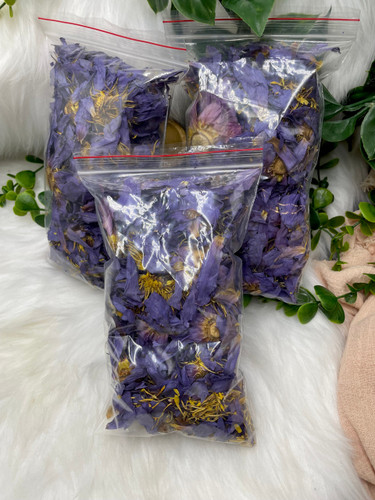
What Is Blue Lotus Tea? Benefits, History and Traditional Uses
12th Mar 2026
For thousands of years, the Blue Lotus flower has held a special place in spiritual traditions, herbal medicine and sacred ritual.
Known for its calming and dream-like qualities, Blue Lotus tea is now being rediscovered by modern wellness communities as a gentle plant ally for relaxation, meditation and inner reflection.
At Earth Child Provisions, Blue Lotus has become one of the most loved herbs for creating peaceful rituals and mindful moments.
What Is Blue Lotus?
Blue Lotus is a sacred water lily native to parts of Africa and Asia. It has striking blue petals and a golden centre, and it grows naturally in still waters such as lakes and rivers.
Despite its name, it is technically a water lily rather than a true lotus, but the name “Blue Lotus” has remained widely used through history.
The flower was highly revered in ancient cultures for both its beauty and its symbolic meaning.
Blue Lotus in Ancient Traditions
Blue Lotus was especially important in ancient Egyptian culture. It frequently appears in temple carvings, artwork and ceremonial scenes.
Ancient Egypt associated the Blue Lotus with:
• rebirth and renewal
• the rising sun
• spiritual awakening
• divine connection
The flower opens with the sunrise and closes at night, which led it to symbolize cycles of life, transformation and consciousness.
Historical records suggest it was used in ceremonial drinks, perfumes and spiritual rituals.
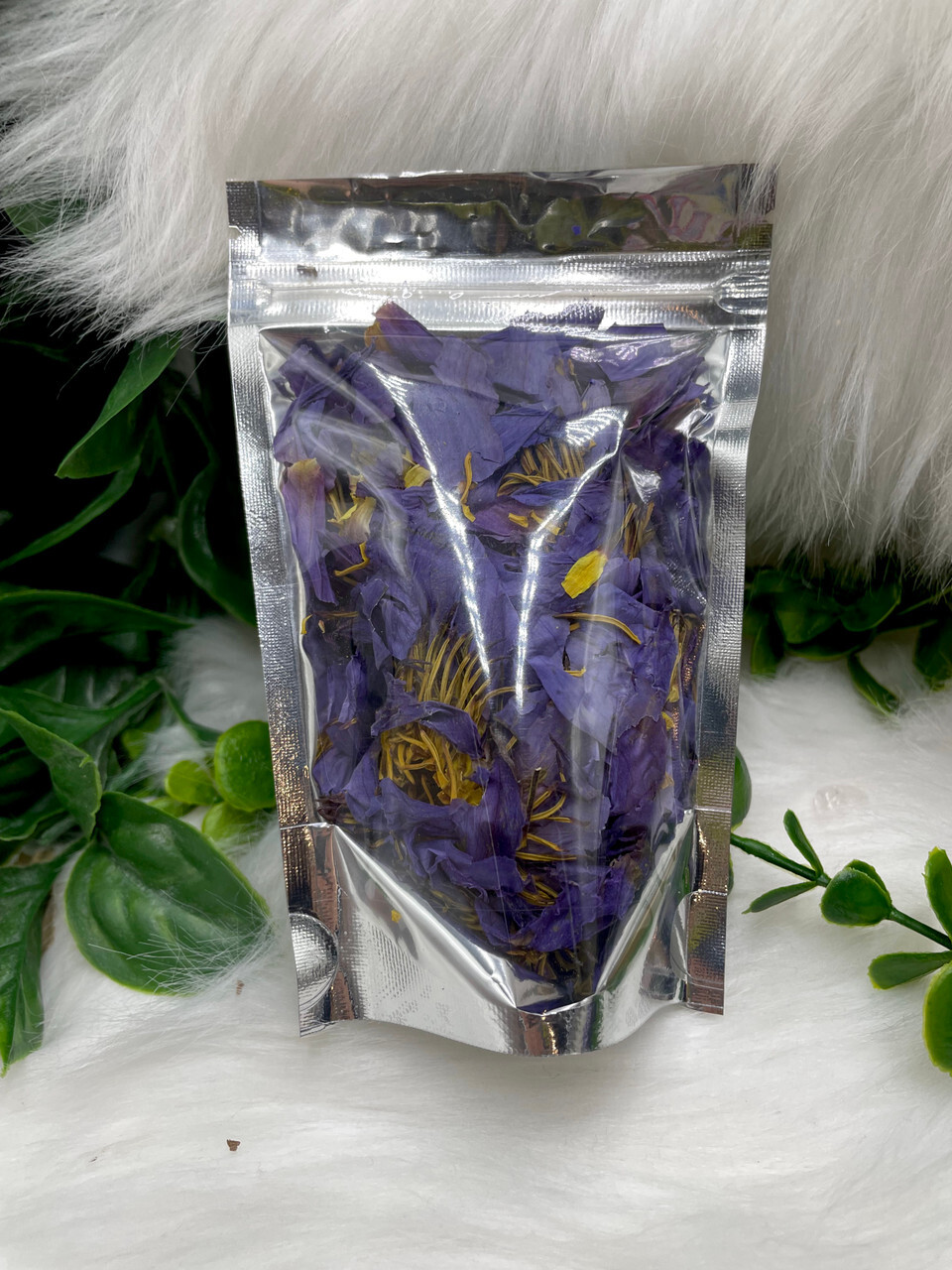
What Does Blue Lotus Tea Taste Like?
Blue Lotus tea has a soft, floral and slightly earthy flavour.
Many people describe it as:
• gently sweet
• lightly herbal
• subtly bitter
Because of its delicate taste, it is often enjoyed on its own or blended with other calming herbs.
Potential Benefits of Blue Lotus Tea
Blue Lotus has traditionally been used to support relaxation and spiritual practices.
While research on the herb is still developing, it has long been valued in herbal traditions for its calming properties.
1. Supports Relaxation
Many people drink Blue Lotus tea in the evening to help the body unwind.
It is often used as part of a calming ritual before meditation, journaling or sleep.
2. Encourages Mindful Awareness
Blue Lotus has historically been associated with spiritual awareness and dreamwork. Some people use it to support meditation or introspective practices.
3. Supports Nervous System Calm
Like many gentle herbal teas, Blue Lotus may help create a sense of calm and ease within the body.
4. Enhances Ritual and Ceremony
Blue Lotus is often used in intentional practices such as:
• meditation
• sound healing
• breathwork
• journaling rituals
• evening wind-down routines
Its history and symbolism make it a beautiful plant for sacred or mindful moments.
How to Prepare Blue Lotus Tea
Making Blue Lotus tea is simple and can become a beautiful daily ritual.
Ingredients
1–2 teaspoons dried Blue Lotus flowers
1 cup hot water
Method
-
Place the dried flowers in a teapot or cup.
-
Pour hot (not boiling) water over the flowers.
-
Allow to steep for 5–10 minutes.
-
Strain and enjoy.
Many people enjoy Blue Lotus tea in the evening as a gentle way to unwind.
Other Ways Blue Lotus Is Used
Beyond tea, Blue Lotus has been used in many traditional preparations.
Common uses include:
• herbal infusions
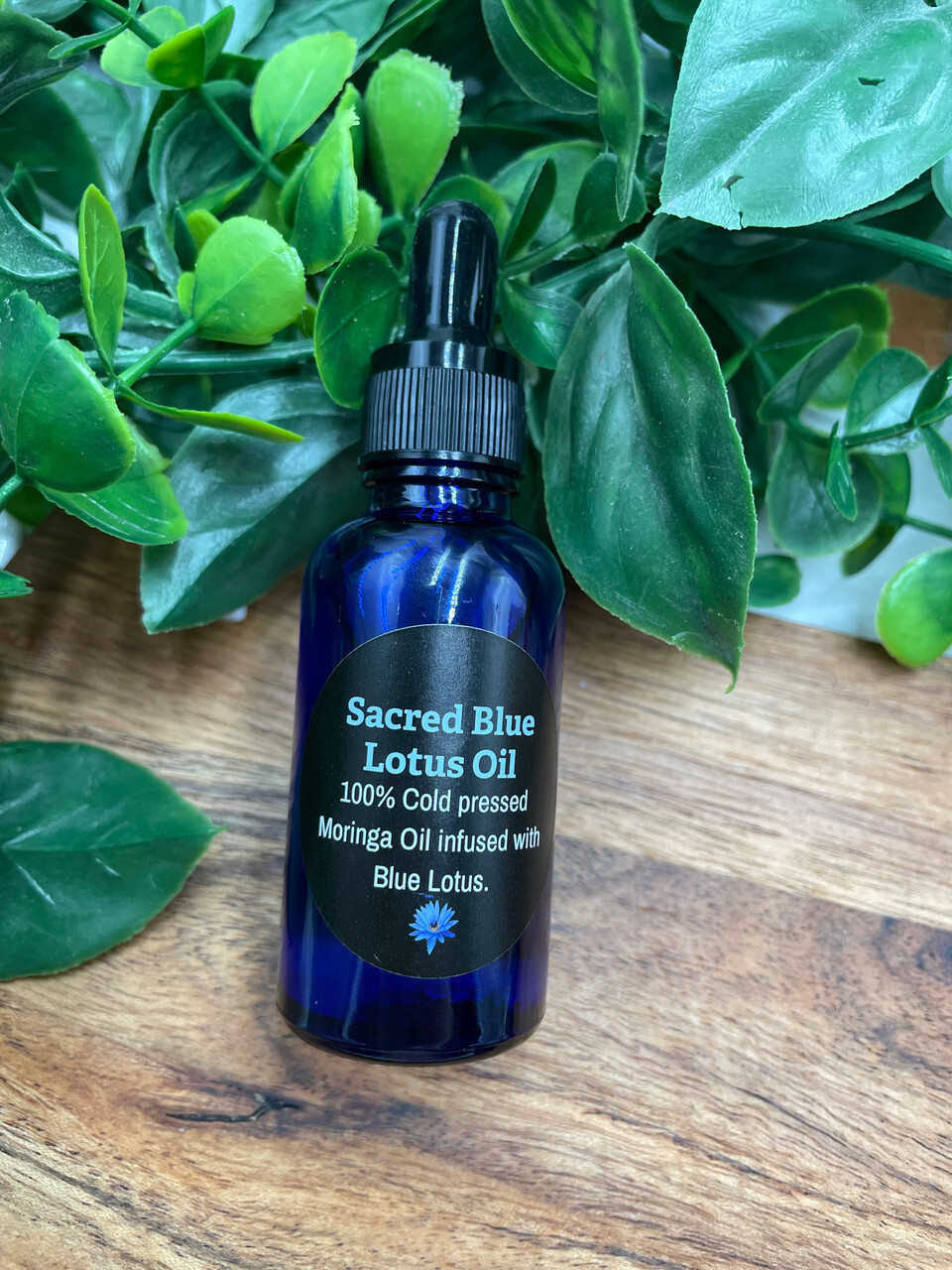
• botanical oils
• herbal smoking blends
• bath rituals
• ceremonial cacao blends
Some people also create Blue Lotus tinctures or add the petals to herbal blends.
Creating a Blue Lotus Ritual
Blue Lotus is often less about the herb alone and more about the experience it invites.
Many people create a small ritual around their tea.
You might:
• light a candle
• take a few deep breaths
• set an intention for the evening
• sip the tea slowly and mindfully
These small rituals can help signal to the body and mind that it is time to slow down.
A Flower of Beauty and Reflection
From ancient temples to modern tea cups, Blue Lotus has carried a long tradition of symbolism, beauty and calm.
Whether enjoyed as a gentle herbal tea or as part of a mindful ritual, it continues to invite moments of stillness and reflection.
Sometimes the most powerful wellness practices are the simplest — a cup of tea, a quiet moment, and a flower that has inspired people for thousands of years.